

How a budget cap quietly stopped spend, reset learning, and cost 15 days of leads
SITUATION
Over the holidays, something didn’t happen.
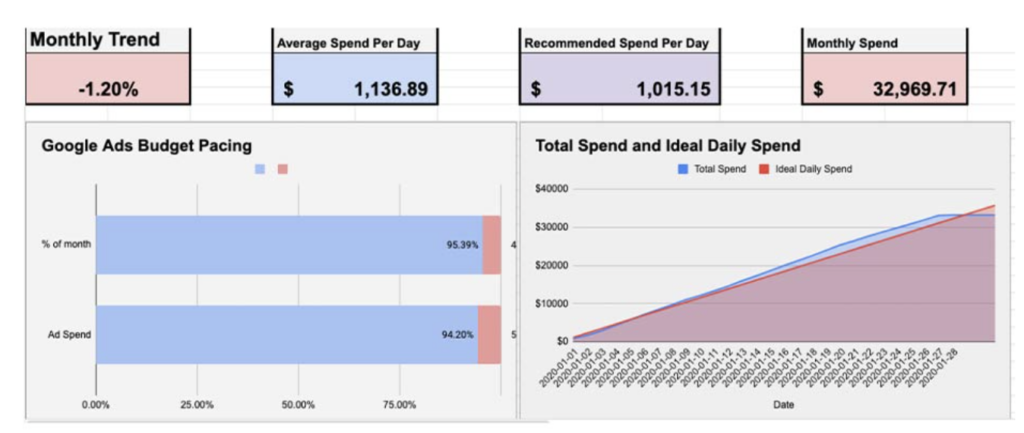
A client’s Google Ads account hit its monthly budget cap earlier than expected.
Campaigns quietly stopped spending.
No alerts fired.
No one noticed.
People were off.
For nearly 4 days, spend dropped to zero across a program where Google PPC is the primary demand engine.
When the team returned, the impact wasn’t just the lost days.
It took almost a full week to stabilize performance again.
Net effect?
👉 ~15 days of lead loss once you account for recovery time.
The most damaging part wasn’t the pause — it was the signal we accidentally sent to the algorithm.

ACTION
From Google’s perspective, here’s what we told the system:
- “We don’t want traffic anymore.”
- “Demand has disappeared.”
- “Your recent optimizations are no longer valid.”
When campaigns abruptly stop spending, learning resets, confidence scores drop, and bid strategies hesitate when you restart.
Getting back to prior performance required:
- Re-establishing spend velocity
- Re-training bidding models
- Re-earning auction trust
- Re-normalizing conversion signals
This wasn’t a toggle-on / toggle-off moment.
It was a re-onboarding.
TAKEAWAYS (What We Changed Immediately)
1. Daily caps > monthly caps
Monthly caps feel safe — but they introduce hard stops.
We now manage at daily caps, with controlled flexibility upstream.
2. Budget control at the campaign / ad-set level
Centralized caps create single points of failure.
Granular controls prevent account-wide blackouts.
3. Offline pacing reports (weekly + monthly)
Platforms optimize in real time.
Humans need pacing views that show:
- Budget burn vs. calendar
- Holiday anomalies
- Risk of early cap-outs
4. Protect algorithmic continuity at all costs
Consistency beats “perfect efficiency.”
Short-term overspend is cheaper than long-term relearning.
5. Holiday ≠ autopilot
If spend matters, monitoring can’t go dark — even when teams do.
THE META LESSON
Performance marketing isn’t just about bids, creatives, or keywords.
It’s about the signals you send — intentionally or not.
Silence is a signal.
Abrupt stops are signals.
Budget caps are signals.
And platforms respond exactly as trained.
OPEN QUESTION
Curious how others are protecting against this:
- Do you use automated alerts when spend flatlines?
- Budget buffers during holidays?
- Rules to prevent hard stops?
- Separate “learning protection” budgets?
Would love to hear other corrective or proactive mechanisms teams are using — especially at scale.